ServicesVinyl Composition Tile
Vinyl Composition Tile in Webster
Vinyl composition tile is a tough, low-cost floor made of limestone and vinyl binder. We test and level your slab, set each tile in adhesive, roll it down and apply the finish coats, so your laundry room, workshop or game room gets a floor that takes abuse.
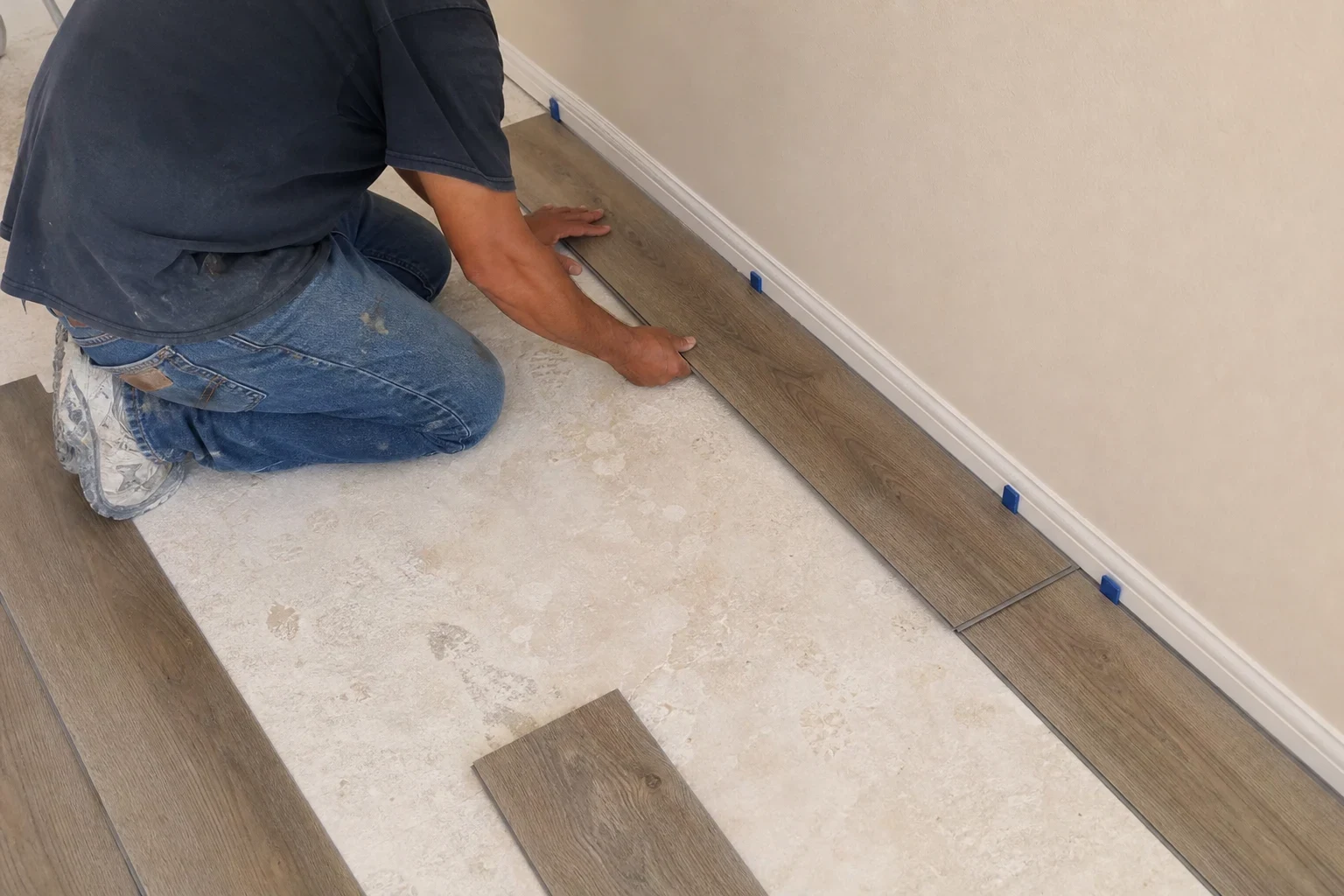
What VCT Is and Where It Fits in Your Home
VCT is a 12-by-12-inch tile, usually an eighth of an inch thick, pressed from crushed limestone, vinyl resin and pigment. It is the floor you have seen in schools and stores, and it does the same job at home: it shrugs off rolling chairs, dropped tools and wet boots, and a worn tile can be popped out and replaced on its own.
The tradeoff is upkeep. VCT is porous at the surface, so it needs coats of acrylic floor finish to resist stains and keep its sheen, and that finish gets stripped and renewed over time. If you want a floor you never wax, luxury vinyl tile or luxury vinyl plank is the better match, and we will tell you that on the phone.
Most of the VCT we put down goes into utility rooms, converted garages, hobby spaces and retro-style kitchens where a checkerboard pattern suits the room. We have been in business 25+ years, long enough to know that a VCT floor is only as flat as the slab it is glued to.
What Our VCT Installation Includes
- Slab moisture testing
- Concrete slabs on the Gulf Coast can push moisture up into the floor. We test before any adhesive goes down, because too much vapor breaks down the glue and lets tiles lift at the edges.
- Old flooring check and removal
- We pull up carpet, vinyl or loose tile and scrape the old adhesive. Older 9-by-9-inch tile and black cutback glue can contain asbestos, so we stop and recommend testing before anything is disturbed.
- Patching and leveling
- Cracks, low spots and old tack strip holes get filled with cement patch and a skim coat, and high ridges get ground down. VCT is thin and rigid, so every bump below it shows through and becomes a wear point.
- Reference lines and adhesive
- We find the middle of the room and mark working lines from it, so the partial tiles along opposite walls finish at matching widths. The clear thin-spread VCT adhesive goes on with the trowel notch the manufacturer calls for, and no tile is placed until the glue has turned tacky.
- Rolling and finish coats
- A weighted roller goes across the new tile in two directions, pressing it into the adhesive ridges so no hollow spots stay trapped underneath. When the glue has cured, several coats of acrylic finish go on as the floor's first protective layer.
- Trim and cleanup
- Vinyl wall base or reinstalled baseboard, transition strips at doorways, and a swept, cleared room when we leave.
Signs VCT Is the Right Floor for the Room
The room sees real wear
Workshops, craft rooms and laundry areas take spills, chair casters and dragged equipment. VCT handles that, and a gouged tile is replaced individually instead of patching a whole floor.
Your existing tiles are curling or loose
Edges lifting on old vinyl tile usually means failed adhesive, often from slab moisture. Replacing it without fixing the cause just repeats the problem.
You are finishing a garage conversion
Converted garages sit on bare slab that often slopes toward the old door. VCT over a leveled, tested slab gives the new room a durable floor without much added height.
You want color or a pattern
VCT comes in dozens of solid and flecked colors, and checkerboards or borders are cut from stock tiles with no special order.
Budget matters more than a no-wax surface
The tile itself is inexpensive. If you are fine maintaining a waxed finish, it stretches a flooring budget further than most options.
How a VCT Job Runs
- 1
Phone conversation and site visit
You tell us the room, its use and what is on the floor now. We measure, look at the slab and check for moisture and old tile that may need testing.
- 2
Acclimation and prep
Tile and adhesive sit in the conditioned room before install so they match its temperature. We remove the old floor, patch and level, then vacuum the slab so dust does not weaken the adhesive's grip.
- 3
Setting the tile
We work from the center lines out, spreading adhesive in sections, setting tile tight with grain direction consistent or quarter-turned as you chose, and rolling as we go.
- 4
Cure, finish and walkthrough
After the adhesive cures we apply the finish coats, install base and transitions, and walk the floor with you. We explain how often to clean, recoat and eventually strip the finish.
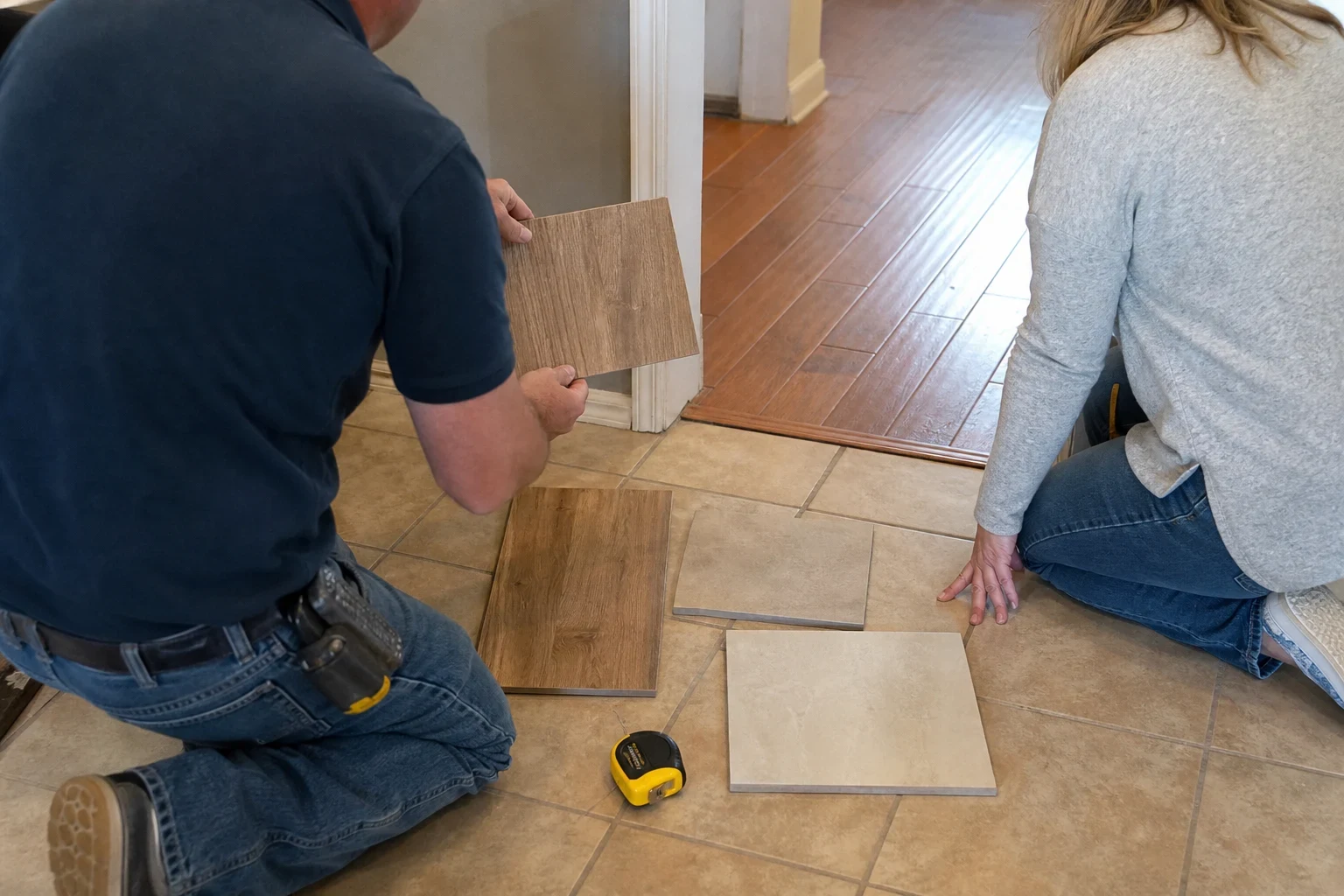
What Moves the Cost of a VCT Floor
The tile is the smallest part of most VCT bills. Labor, slab prep and what comes off the floor first decide the total. We price each job after seeing the room and give you the figures when you get your quote by phone.
- Slab condition
- A flat, clean slab goes quickly. Cracks, slope, glue residue and moisture that needs a sealer add materials and hours.
- What is coming up
- Pulling carpet is fast, while scraping old vinyl and glue takes longer. Tile that tests positive for asbestos needs separate abatement before we begin.
- Room size and layout
- Small rooms with many corners, closets and door jambs mean more cut tiles per square foot than one open rectangle.
- Pattern and finish
- A single color laid straight is simplest. Checkerboards, borders and extra finish coats add labor.
Common Questions About VCT
Something not covered here? (346) 536-5395
Is VCT just another name for luxury vinyl tile?
They are two different products. Vinyl composition tile is mainly crushed limestone held together by vinyl resin, glued to the slab and protected with coats of floor finish. Luxury vinyl tile is thicker and more flexible, and its factory wear layer never needs waxing. The look, the feel underfoot and the upkeep all differ.
How much maintenance does VCT need at home?
Sweep and damp mop with a neutral cleaner. Add a fresh coat of finish when traffic areas dull, and strip and rebuild the finish every so often depending on use. A lightly used room may go a long time between strips.
Can you lay VCT over my old vinyl floor?
Sometimes, if the old floor is a single layer, stuck down firmly everywhere and flat. Cushioned sheet vinyl and loose tiles have to come up, because VCT needs a firm, stable base or it will crack and telegraph.
My old tiles are 9 by 9 inches. Is that a problem?
That size was common in older homes and may contain asbestos, as can the black glue under it. We do not sand, grind or break it until a test confirms what it is. If it tests positive, an abatement contractor removes it before we start.
How soon can we use the room?
You can walk on fresh tile carefully the same day, but furniture and heavy traffic wait until the adhesive cures and the finish coats dry. We give you exact timing for the products used on your floor.
Plan Your VCT Floor With Us
Tell us about the room and what is on the floor now, and we will explain the prep it needs and what drives your cost.