ServicesLuxury Vinyl Tile
Luxury Vinyl Tile Installation in Webster
We install luxury vinyl tile in kitchens, baths, laundry rooms and living areas, glue-down or click-together, with the slab tested and flattened before the first tile goes in. You get the look of stone or ceramic with a softer, warmer, water-resistant surface.
What Luxury Vinyl Tile Is and When It Fits
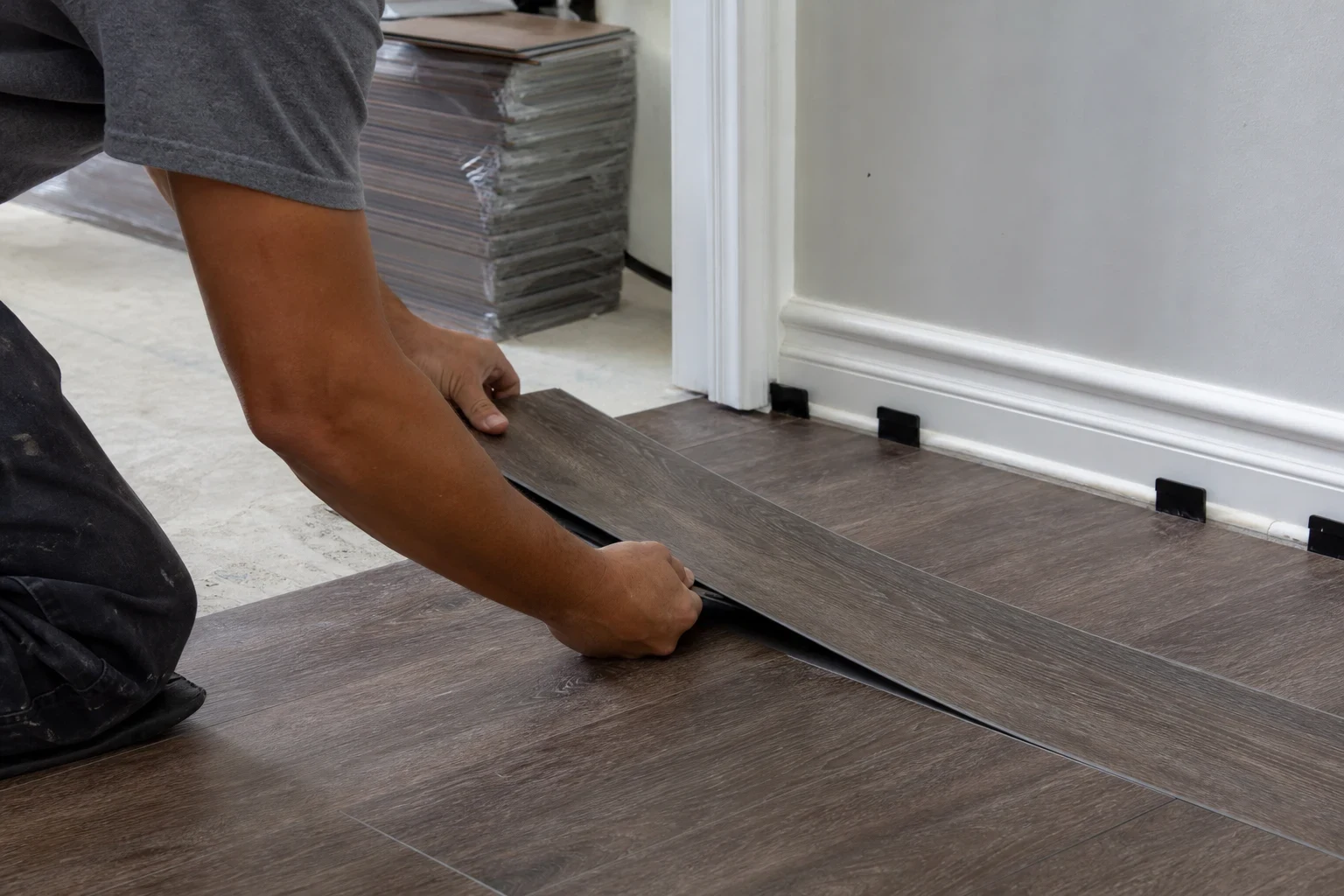
Luxury vinyl tile is a layered vinyl floor made to look like stone or ceramic, usually in square or rectangular formats such as 12 by 24 inches. A clear wear layer protects a printed design film. Underneath is either a flexible vinyl body that is glued to the floor or a rigid stone-plastic composite (SPC) core that clicks together and floats. Some styles are made to be grouted, which gives you a real tile joint without the weight and chill of porcelain.
It is a strong choice for rooms where water hits the floor and you stand for long stretches. Most houses in Webster and nearby towns like League City and Friendswood sit on concrete slabs, and LVT does well on a slab as long as the concrete is flat and its moisture is measured first. If you would rather have long wood-look boards, our Luxury Vinyl Plank page covers that product.
We have been in business 25+ years, and most failed vinyl floors we have pulled up came down to prep, not product. That is where we spend our time.
What Our LVT Installation Includes
- Slab moisture testing
- Concrete gives off water vapor, and a damp slab can break down adhesive or trap moisture under a floating floor. We test before deciding between glue-down and click. A high reading points to a vapor barrier underlayment or a moisture-rated adhesive.
- Grinding and leveling
- Rigid tile shows every dip and hump, and click joints can separate over a low spot. We check the floor with a long straightedge, grind high ridges and fill lows with patch or self-leveling compound to the tolerance the manufacturer lists.
- Removal of the old floor
- We take up carpet, pad, tack strip, laminate or ceramic tile and grind the leftover thinset smooth. If your home has old sheet vinyl or 9-inch square tiles that could contain asbestos, we recommend testing them before anything is pulled up.
- Layout and grout planning
- We snap centerlines so cuts at doorways and along the most visible walls are balanced, not slivers. For groutable LVT we set spacing and use a flexible grout made for vinyl.
- Trim, transitions and cleanup
- Door casings are undercut so tiles slide beneath them, the perimeter expansion gap is covered with baseboard or quarter round, and transitions are fitted where LVT meets carpet or another floor. We haul off the old material and vacuum before we leave.
Signs Your Floor Is Ready for Luxury Vinyl Tile
Cracked or hollow ceramic tile
Clay soils shift with wet and dry seasons, and slabs move with them. Rigid ceramic cracks along those lines, while LVT has enough give to ride small movement without breaking.
Grout that never looks clean
Porous cement grout soaks up spills and mop water. Butt-joint LVT has no grout lines at all, and groutable styles use a stain-resistant grout.
Swollen laminate near water
Laminate with a fiberboard core puffs up at the edges near dishwashers, sinks and tubs. LVT cores do not absorb water, so a slow drip does not swell the tile.
Curling sheet vinyl seams
Old sheet vinyl lifts at seams and edges as its adhesive fails. Those raised edges catch dirt and trip feet.
A hard, cold floor where you stand
Porcelain over concrete is tough on knees in a kitchen. Vinyl is warmer to the touch and quieter underfoot.
How an LVT Job Runs
- 1
Measure and test at your home
We measure each room, test the slab or check the wood subfloor, and note door heights, appliances and transitions. You get a written scope that lists prep work separately from installation.
- 2
Deliver and acclimate
Boxes go into the conditioned rooms where they will be installed and sit for the time the manufacturer specifies, so the tile matches your indoor temperature before it is cut.
- 3
Prep day
Old flooring comes up, thinset is ground down and low spots are filled. Leveling compound has to cure before tile goes over it, which can add a day.
- 4
Installation
Glue-down tile is set into adhesive at the right open time and pressed with a heavy floor roller so the full back of every tile makes contact. Click tile is locked row by row with staggered joints and a gap left at every wall.
- 5
Trim and walk-through
We install baseboard or quarter round and transitions, reset what we moved, then walk the floor with you and go over cleaning and furniture pads.
What Moves the Cost of Luxury Vinyl Tile
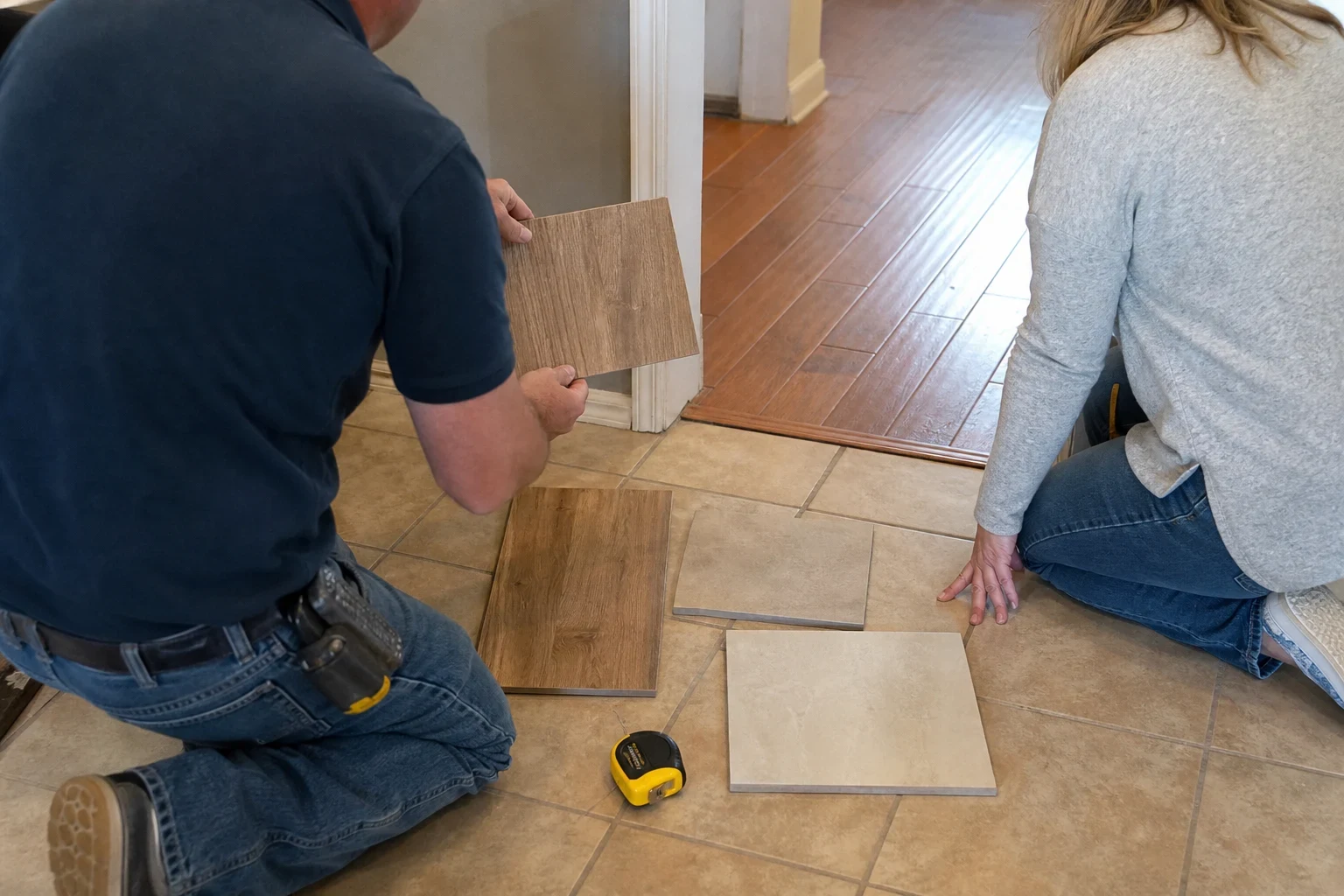
Your price depends far more on the floor underneath and the shape of the rooms than on the tile alone. We price after seeing the space, and the written estimate separates material, removal, prep and installation so you can see where the money goes.
- Core type and wear layer
- Rigid SPC click tile and flexible glue-down tile are priced differently, and a thicker wear layer costs more. Groutable styles add grout and labor.
- What comes up first
- Pulling carpet is quick. Removing ceramic tile and grinding off thinset takes far more labor and disposal.
- How flat and dry the concrete is
- Concrete that is already level and dry may need little more than a sweep and primer. Humps get ground down and hollows get filled, and a wet test result means extra protection goes under the tile, either a barrier sheet or a moisture-rated adhesive.
- Room shape and details
- Open square rooms go fast. Closets, angled walls, many doorways, toilets to pull and reset, and new trim all add time.
Luxury Vinyl Tile Questions
Something not covered here? (346) 536-5395
Is luxury vinyl tile waterproof?
The surface and the core do not absorb water, so spills and wet mops are not a problem. The seams and perimeter are not sealed, though, so standing water from a flood or a burst supply line can get underneath. Click tile can often be lifted, dried and relaid, while glue-down tile usually has to be replaced in the affected area.
Should I choose glue-down or click LVT?
Click tile floats, installs faster and tolerates small slab movement. Glue-down tile is thinner, feels more solid, handles heavy furniture and direct sun better, and suits rooms with many cuts. The slab test and how you use the room usually decide it, and we explain the reason for our recommendation.
Can you put LVT over my existing ceramic tile?
Sometimes. The old tile has to be stuck tight to the slab with no hollow-sounding spots when we tap across it, and the grout lines get filled so they do not telegraph through the vinyl. It raises the floor, so we check door clearances, the dishwasher opening and transitions before recommending it.
How does LVT handle hot sun through glass doors?
Vinyl expands when it heats up, and a floor in full afternoon sun can move enough to gap or buckle if it is pinned. We leave the proper perimeter gap, never nail trim through the floor, and may suggest glue-down tile or a sun-rated product near large windows. Blinds during the hottest hours help too.
How is luxury vinyl tile different from luxury vinyl plank?
The material is the same; the shape and look differ. Tile comes in squares or rectangles printed like stone or ceramic, and some styles take grout. Plank is long and narrow and imitates wood, which is covered on our Luxury Vinyl Plank page.
Start With a Conversation About Your Floor
Tell us which rooms you want covered and what is down there now. We will talk through tile formats, glue-down or click, and the prep your slab may need, then set a time to measure.