ServicesTile Flooring
Tile Flooring in Webster
We install porcelain, ceramic and natural stone tile on concrete that has been properly prepared. We grind the high spots, fill the low ones, cover cracks with an isolation membrane and leave room for movement. You get a floor that stays flat, stays firmly attached and keeps slab cracks out of your grout.
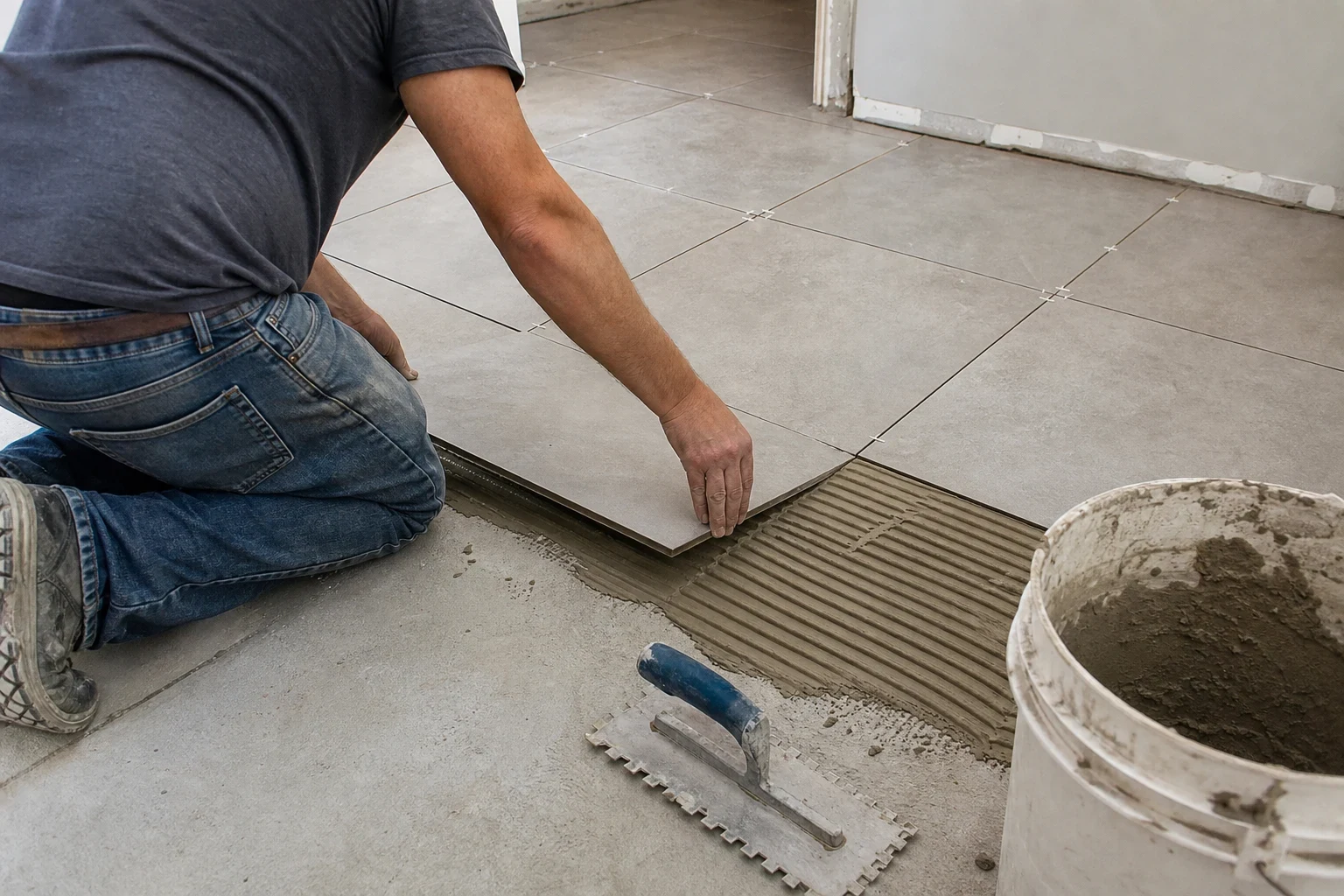
Why Tile Fails, and How We Set It So It Doesn't
Most cracked tile is not a tile problem. The cause is usually underneath. The slab moves with the clay soil below it. The thinset was spread too thin, which leaves hollow spots under the tile. Or the installer ran the field tight to the walls with no room to expand. When the concrete shifts even slightly, rigid tile has nowhere to go, so it cracks or pops loose.
Many homes around Webster sit on slab foundations over expansive clay, so we treat the concrete as the most important part of the job. We have been in business more than 25 years, and that time has taught us that the hours spent on prep decide whether a floor lasts. Tile is the right call for kitchens, baths, laundry rooms and entries, where water and grit wear out softer floors. If you want the look of tile with more give underfoot, our luxury vinyl tile page covers that option.
Everything That Goes Into the Job
Tear-out down to clean concrete
Carpet, sheet vinyl, laminate or old tile comes up first, and we scrape adhesive and leftover thinset ridges off the slab. Some older homes have dark cutback mastic under the old floor. If we find it, we stop and let you know, because some pre-1980s adhesives should be tested for asbestos before anyone grinds them.
Slab flattening
We check the floor with a long straightedge. Large-format tile needs the surface within about 1/8 inch over 10 feet, so we grind humps and use self-leveling underlayment to fill dips. This flatness prevents lippage, the uneven tile edges that catch a sock or a broom.
Crack isolation membrane
Any crack already in the slab gets covered with a sheet or liquid-applied membrane. It works as a slip layer, so a hairline crack can open and close in the concrete while the tile and grout above it stay whole.
Movement joints
We leave a gap at every wall and add soft, caulked joints in the field on larger floors and in sunny rooms. Thermal and structural movement then gets absorbed in planned spots instead of in your grout.
Full-coverage setting
Tile goes down in polymer-modified thinset with the correct trowel notch, and large pieces are back-buttered. We lift a tile now and then to confirm the mortar contact is solid with no voids.
Grout, trim and cleanup
We grout with cement-based, urethane or epoxy grout depending on the room, install transitions to adjoining floors, and haul away debris.
Signs Your Tile Floor Needs Replacing
Cracks that run in a line
A crack that continues across several tiles usually follows a slab crack below. Swapping out single tiles won't hold unless the new floor has a membrane over that crack.
Hollow sound underfoot
Tap a tile with a coin or a screwdriver handle. A dull, hollow sound means the tile has lost its grip on the thinset, and it will eventually crack or come loose.
Tenting or popped tiles
Tiles that lift into a ridge were installed without perimeter or field joints. Expansion had nowhere to go but up.
Crumbling or dark grout
Grout that sands out or stays dark after mopping is letting water into the setting bed. In a bath or laundry room, that water can reach the slab and the base of the walls.
How a Tile Job Runs
- 1
Measure and inspect
We measure each room, check the slab for flatness and cracks, and talk through tile size, layout and grout color. You then get a written estimate that lists prep work separately from installation.
- 2
Demolition and prep
We cover vents and doorways, remove the old floor and flatten the slab. Taking out old tile is the dustiest part of the job, so we contain the work area and clean up as we go.
- 3
Layout and membrane
We snap reference lines from the room's main sightline so cut pieces land at walls and under cabinets, not in a doorway. Then the membrane goes down over any cracks.
- 4
Setting
The tile is set, leveled and spaced. Thinset needs about a day to cure before grouting, and Gulf Coast humidity can stretch that, so we don't rush it.
- 5
Grout and walkthrough
We grout, caulk the movement joints, install transitions and wipe off the haze. Then we walk the floor with you before we leave.
Where the Money Goes on a Tile Job
Material is usually not the biggest line on a tile estimate. Prep and labor swing the most from one house to the next, so we look at your slab before we quote. Your written estimate lists each item below on its own line.
- Slab condition
- A flat, sound slab needs little prep. Dips, humps and active cracks add grinding, leveling compound and membrane.
- What comes up first
- Pulling carpet is quick. Chipping out old tile and scraping thinset takes far longer and produces more debris to haul.
- Tile size and material
- Large-format porcelain needs a flatter floor and more careful handling. Natural stone may need sealing, and some varieties need a white thinset that won't stain.
- Pattern and cuts
- Straight lay is the most efficient. Herringbone, diagonal and offset patterns, along with rooms full of angles, add cutting time and waste.
- Grout and trim
- Epoxy and urethane grouts cost more than cement grout but resist staining. Metal edge trim and stair nosing also add to the total.
Tile Flooring Questions
Something not covered here? (346) 536-5395
Is it possible to lay new tile on top of the tile I already have?
It can be done, though we seldom advise it. Every existing tile has to be firmly bonded and the surface has to be flat. The extra thickness also raises the floor, which can bind door bottoms, trap a dishwasher and leave an awkward step at the next room. Any cracks or hollow spots in the old layer carry straight into the new one, so in most cases we take the old tile out.
Should I choose porcelain or ceramic?
Porcelain is denser and absorbs less water, and on most porcelain the color runs through the body, so chips show less. Ceramic is softer, easier to cut and works well in low-traffic rooms. For kitchens, entries and baths, we usually point people to porcelain.
When is the new floor ready to use?
Careful walking is usually fine the day after the grout goes in. Hold off a few more days on heavy furniture and appliances, since the thinset keeps curing and gaining strength. We give you the timing for the exact mortar and grout used on your floor.
Why did the tile in my last house crack?
The usual causes are slab movement with no crack isolation membrane, missing movement joints, or thin mortar coverage that left hollow spots. All three are installation choices, which is why we treat them as standard steps rather than extras.
Will removing old tile make a mess of the house?
Breaking up tile does create dust and noise. We seal off the work area, cover the HVAC returns, and vacuum and haul debris each day. Rooms that are not being worked on stay usable.
Find Out What Your Slab Needs Before You Pick Tile
Tell us about the rooms and the floor that's there now. We'll explain what prep your concrete is likely to need and set up a time to measure.