ServicesCarpet Tile
Carpet Tile Installation in Webster
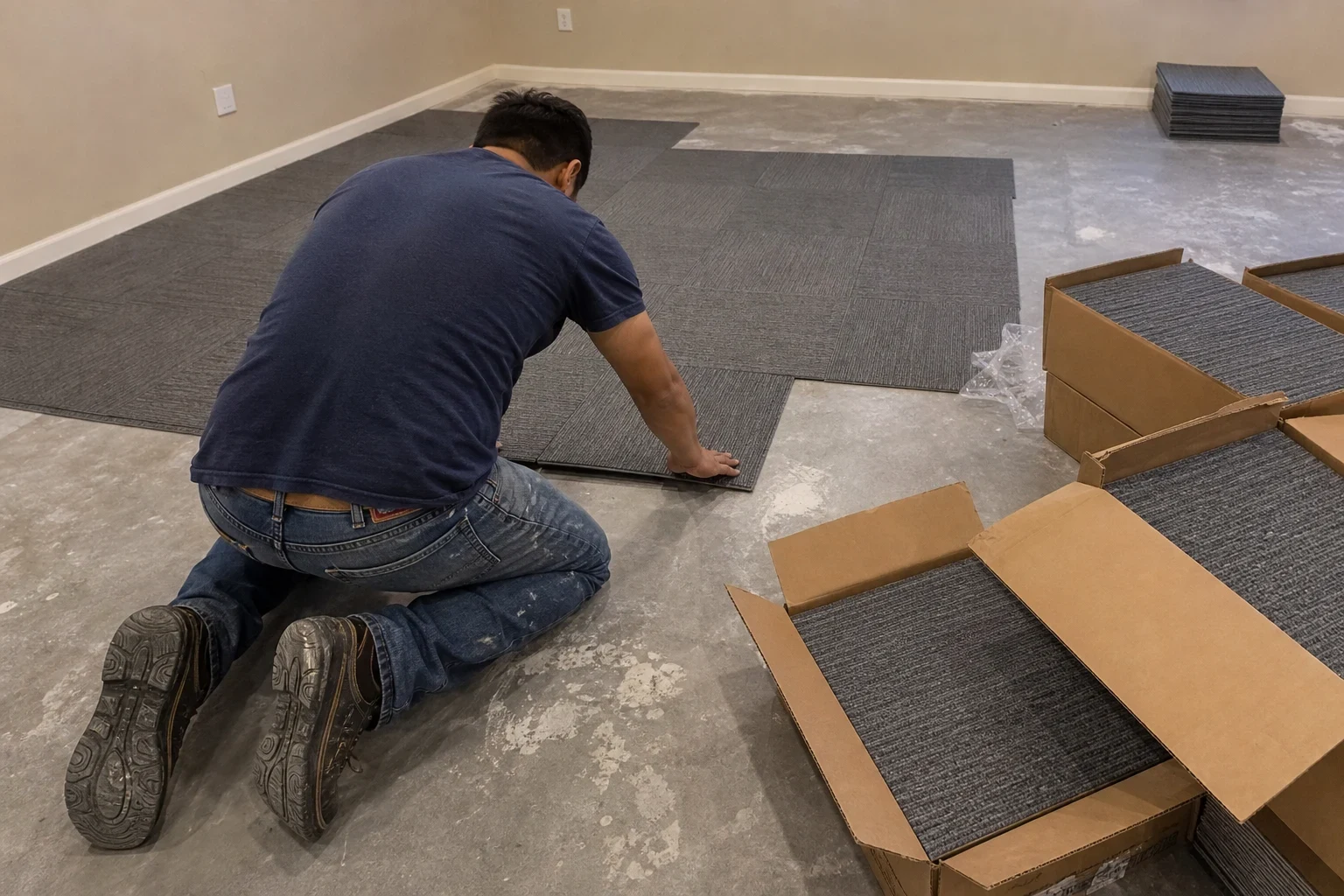
We install carpet tile in the rooms that take the most abuse: game rooms, home offices, playrooms and converted garages. Each square is set in release adhesive over a tested, flattened slab, so a ruined tile comes up on its own and the rest of the floor stays put.
What Carpet Tile Is and When It Makes Sense
Carpet tile is carpet manufactured as modular squares or planks, most commonly 18 or 24 inches across. Each piece has a rigid, dimensionally stable backing, so it keeps its size and shape on its own. Broadloom depends on tack strip and a power stretcher to stay taut. Carpet tile simply rests flat, held by its own weight and a light film of pressure-sensitive adhesive, which means no long seams to pull apart and no re-stretching years later.
It is the right call where spills, pet accidents or water are a real possibility. A stained square can be lifted and replaced in minutes. Most homes around here sit on concrete slabs, and in this humid climate those slabs can push moisture up into a floor. We test for that before anything goes down. Over our 25+ years in business, we have seen the slab underneath decide how long a carpet tile floor lasts more often than the tile itself.
If you want wall-to-wall softness in a bedroom or living room, our carpet installation page covers broadloom. For a hard surface that still handles water, look at luxury vinyl tile.
What the Work Includes
- 01
Tear-out and disposal
Old carpet comes up along with its pad and the tack strip nailed around the edges, or we lift the existing vinyl. Staples, adhesive ridges and nail heads are removed so nothing telegraphs through the new tile.
- 02
Slab moisture testing
We check the concrete for moisture before choosing an adhesive. High readings mean a moisture-tolerant adhesive or a vapor-retarding primer, and we tell you which one and why.
- 03
Patching and leveling
Cracks, low spots and old adhesive humps get ground down or filled with cement-based patch. Carpet tile backing is firm, so a dip or ridge underneath shows as a visible edge.
- 04
Layout from the room's center
We snap center lines and work outward so the cut tiles at each wall come out roughly equal. Tiles go in either monolithic, all arrows one way, or quarter-turn, each tile rotated 90 degrees to hide pile direction.
- 05
Trim, transitions and cleanup
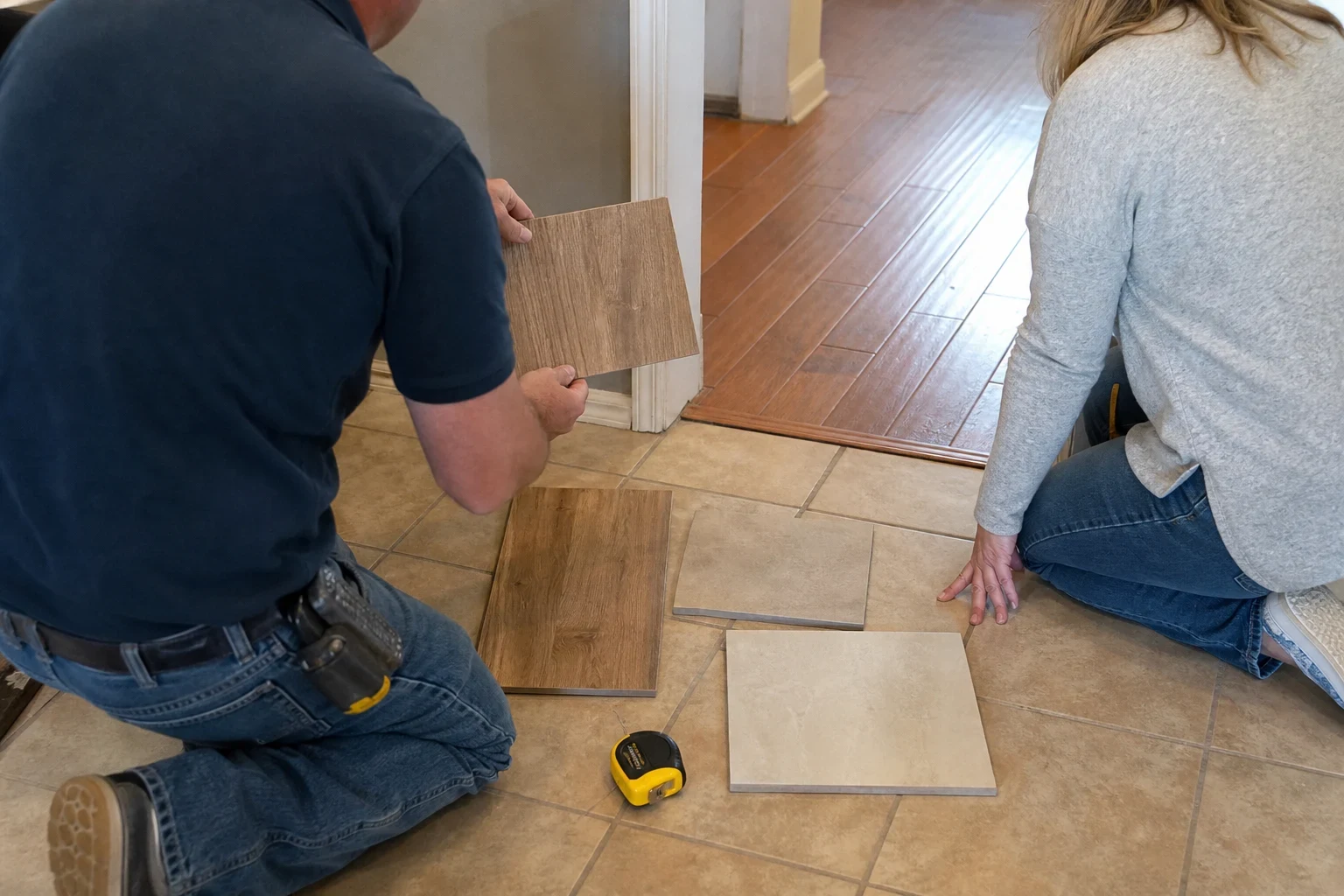
Door jambs are undercut so tiles slide beneath them, and we fit transition strips where carpet tile meets tile, hardwood or vinyl plank. We vacuum, haul off debris and leave you a few spare tiles from the same dye lot.
Questions about Carpet Tile?
Call(346) 536-5395Signs Carpet Tile Fits Your Room
The same stains keep coming back
Spills in a game room or pet spots near a back door wick into the pad and reappear after cleaning. With carpet tile you replace the square instead of fighting the stain.
A garage conversion or slab-level room
These rooms often sit lower and run cooler and damper than the rest of the house. Carpet tile with a hard PVC backing does not hold moisture the way a foam pad does.
Seams that split or carpet that ripples
Broadloom loosens as the backing relaxes in humid weather and the tack strip loses grip. Carpet tile has no stretch to lose.
Office chairs wearing a path
Rolling casters crush pile and fray carpet in one spot. Tiles under the desk can be rotated or swapped when that patch wears.
A hard floor that echoes
Some owners want a softer, quieter surface in a media room or playroom without committing to wall-to-wall carpet.
How an Install Day Runs
- 1
Measure and test
We measure the room, take moisture readings on the slab and look at the doorways and transitions. You get your quote with the adhesive and prep spelled out.
- 2
Clear and prepare
Furniture is moved, old flooring comes up and the slab is scraped, ground and patched. Patch needs time to cure before tiles go down, so heavy prep can push setting to a second visit.
- 3
Roll adhesive and let it tack
Release adhesive is rolled on and left to dry until it is tacky but not wet. Setting tiles into wet adhesive turns it into a permanent glue and defeats the point of replaceable squares.
- 4
Set, cut and roll
Tiles go in from the center lines, edges tight but not compressed, then cut at walls and around vents. We roll the floor so each tile beds evenly into the adhesive.
- 5
Walkthrough
We walk the room with you, check transitions and point out the spare tiles. You can walk on it right away and put furniture back the same day.
What Moves the Price
The squares themselves are only one part of the bill. Most of the difference from one job to the next comes from the shape of the room and what the concrete needs before any tile goes down. We measure and test first, then lay out the quote line by line so you can see what each part of the work costs.
- Product and backing
- Hardback PVC tiles, cushion-back tiles and residential-grade plush tiles vary widely in cost. Pile height, fiber type and stain treatment all play in.
- What the concrete needs
- Concrete that is already true and dry goes almost straight to adhesive. Hairline cracks, leftover mastic, humps from an uneven pour or a high moisture reading each add a step, whether that is grinding, cement patch or a vapor-retarding primer.
- Removal and haul-off
- Pulling glued-down vinyl or old carpet with a stapled pad takes more labor than lifting loose flooring.
- Room shape and transitions
- Closets, angled walls and several doorways mean more cuts and more transition strips than a simple rectangle.
Carpet Tile Questions
If one square gets ruined, can you swap out just that one?
That is the main reason people choose carpet tile. The release adhesive grips without bonding permanently, so a damaged square lifts at one corner and a fresh one presses into the same spot. Hold on to the spares we leave behind, because tiles ordered years later may come from a different dye lot and not quite match.
Will carpet tile hold up if water gets in?
Hard-backed tiles shed water better than broadloom on a foam pad, and soaked squares can be pulled up so the slab dries out. Whether the tiles can be saved depends on how long they sat wet and what the water carried in. Anything contaminated should be replaced.
Is it as soft as regular carpet?
Not usually. Most carpet tile is lower and denser than broadloom, and there is no separate pad. Cushion-back tiles add some give if comfort underfoot matters more to you than durability.
Do the seams show?
On a flat slab with tight installation, the grid is hard to see in most patterns. Quarter-turn layouts hide pile direction, and textured or patterned tiles hide seams better than solid plush.
How long does a room take?
A typical bedroom or office is a one-day job once the slab is ready. Extra grinding, patching or moisture treatment can add a day, and we will tell you that when we quote.
Ready to Plan Your Carpet Tile Floor
Tell us which room, what is on the floor now and how it gets used. We will set up a visit to measure and test the slab, then give you a clear quote.