ServicesStair Flooring
Stair Flooring in Webster
We cover staircases in carpet, hardwood, luxury vinyl and laminate. Every tread is measured on its own, every nosing is fastened to solid wood, and the first and last risers stay close in height to the rest so nobody catches a toe.
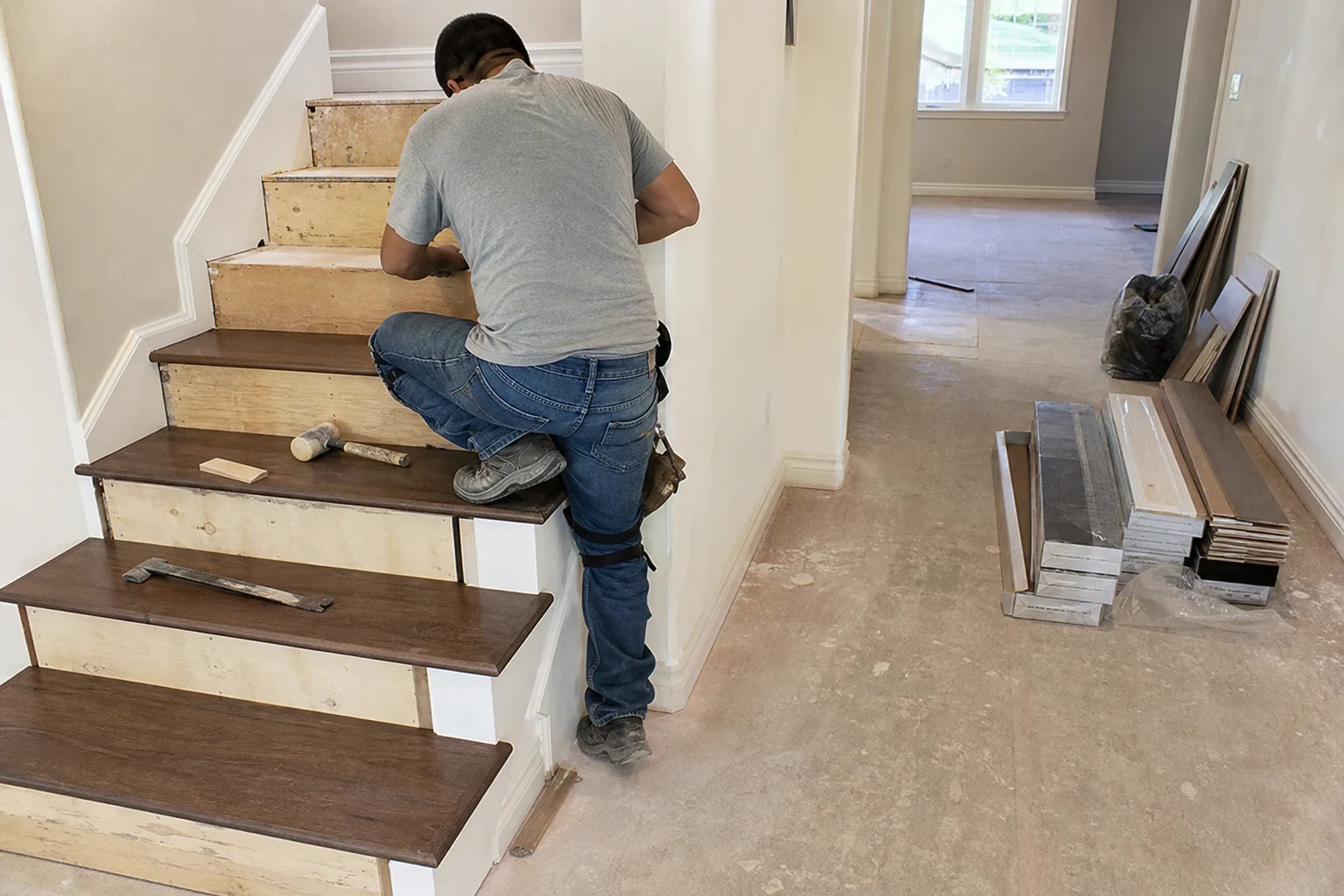
Why stairs are their own job
A staircase is not a small floor. Each step has a tread, a riser and a nosing, and no two are cut quite the same. Builders rarely frame stairs perfectly square, so a plank that fits step four may leave a gap on step five. We measure and scribe every piece instead of cutting a stack to one size.
Most two-story houses around here went up with carpet on the stairs, laid over pine or particleboard treads that were never meant to show. When you change the floor downstairs, the stairs usually need more than a new surface. We look at what is under the carpet first, then tell you which materials will hold up on it.
We have been in business 25+ years, and stair work is where that time shows most: knowing which treads will take a retrofit cap, which need replacing, and how to keep riser heights within tolerance after new material adds thickness.
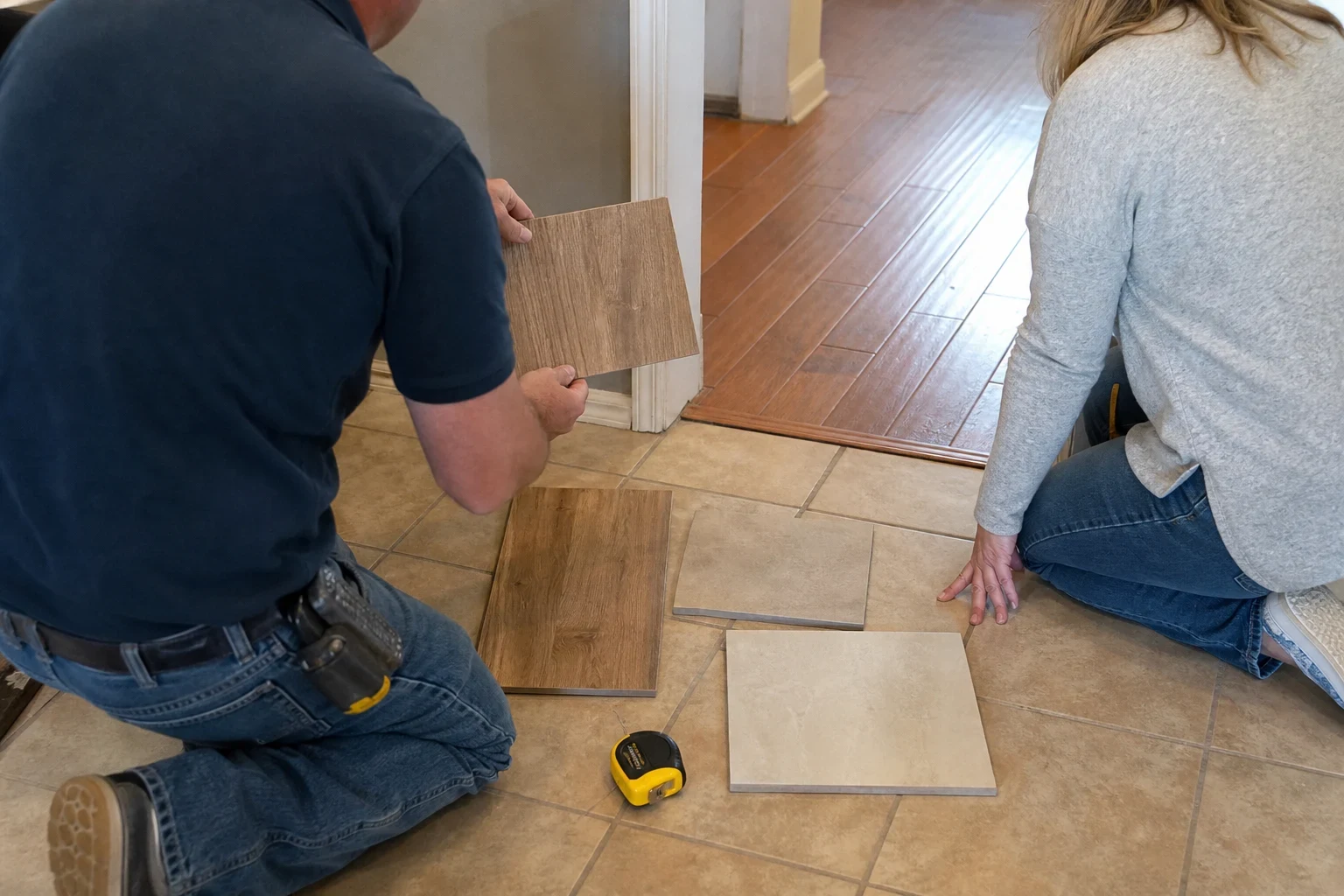
What stair flooring includes
- 01
Tear-out and tread prep
We pull old carpet, pad, tack strip and every staple, then check each tread for splits, crowning and loose fasteners. Squeaky treads get glued and screwed into the stringers before anything new goes on.
- 02
Carpet, waterfall or cap-and-band
Waterfall carpet rolls over the nosing in one piece and is quicker to install. Cap-and-band wraps the nosing tightly and is stapled under its lip, which gives a crisper edge and wears more evenly. We pad each tread separately so the nosing does not go soft.
- 03
Hardwood and retrofit treads
For a wood look we either replace the builder treads with solid hardwood or trim off the old bullnose and set retrofit treads and riser covers over the existing frame. Both are prefinished, so there is no sanding or finishing dust in your home.
- 04
Vinyl and laminate with matching nosing
Luxury vinyl plank and laminate need a stair nose profile that matches the floor. We glue and fasten it to the tread so it does not rock or crack, which is the most common failure on these stairs.
- 05
Top and bottom riser correction
Adding tread thickness raises the bottom step and shortens the top one. We plan for it so adjacent risers stay within the 3/8 inch variation residential code allows, adjusting the landing or first tread where needed.
Questions about Stair Flooring?
Call(346) 536-5395Signs your stairs are ready for new flooring
Carpet worn pale at the nosing
The front edge of each step takes nearly all the foot traffic. Once the pile is crushed or the backing shows there, the carpet will not recover.
Squeaks and soft spots
Most of that noise comes from a tread that has pulled away from its stringer, or a glue block underneath that has failed. New carpet over it muffles the sound for a season, but the movement continues until the tread is fastened down again.
A loose or cracked stair nose
On vinyl and laminate stairs, a nosing that rocks under your heel was often only clicked or tacked in place. It is a trip hazard and should be reset or replaced.
A new floor downstairs
If you are putting luxury vinyl plank or hardwood in the living areas, carpeted stairs can look out of place. Planning both together lets us match color and nosing profile.
Slick or worn treads
Smooth surfaces in socks are a real fall risk. A textured vinyl, a matte hardwood finish or carpet on the treads all add grip.
From first visit to the final walk-through
- 1
Record each tread and riser
Before any material is ordered, we write down the width and depth of every tread and the height of every riser, and note winders, open sides and any balusters anchored in the treads. Then we explain which approach suits your staircase and the reason for it.
- 2
Remove and fasten
On install day we strip the old covering, bag the debris and fix any loose or squeaking treads. If a tread is cracked or too soft to hold a nosing, we replace it then.
- 3
Scribe, cut and set
Every tread and riser is cut to the numbers we recorded for that step. We begin at the landing and finish at the bottom step, which keeps our knees and tools off any tread whose adhesive is still setting. Nosings are glued and mechanically fastened.
- 4
Clean up and walk it
We vacuum the staircase and the floors below, then walk every step with you so you can feel for movement and check the edges. Most carpet stairs are usable the same day; glued treads may need a few hours before heavy traffic.
What moves the price of stair flooring
We price stairs per step, then add for whatever repairs and parts a given step calls for. Square footage tells us little on a staircase. Two runs with the same count can come out quite differently once the old carpet is up and the treads are exposed. We explain each line before you decide.
- Step count and shape
- Straight runs go fastest. Winders, pie-shaped steps at a turn and landings take extra cutting and material.
- Material and nosing type
- Carpet is usually the simplest. Solid hardwood treads, retrofit caps and matching vinyl or laminate stair nose pieces each add parts and labor per step.
- Open sides and balusters
- An open stringer needs return nosings on the exposed ends. Balusters set into the treads must be worked around or removed and reset, which adds time.
- Condition underneath
- Particleboard treads, cracked bullnoses or loose stringers need repair or replacement before a hard surface can go on.
Stair flooring questions
Can luxury vinyl plank go on stairs?
Yes, with a proper stair nose and full adhesion on each tread. Floating click planks should not simply be laid on a step because they can shift. We glue the plank and fasten the nosing so the edge stays solid. It pairs well with luxury vinyl plank flooring downstairs.
Can you put hardwood over my carpeted stairs?
Usually, once the carpet is gone. We trim off the existing bullnose and set retrofit hardwood treads and riser covers over the frame, or replace the treads entirely if they are particleboard or damaged. We decide after looking at the treads, not before.
Will new treads change my step heights?
They add thickness to every tread, which mostly cancels out except at the very top and bottom. We measure for that and adjust so the first and last risers stay close to the others. Uneven steps are a common cause of stumbles, so we treat this as part of the job.
How long does a stair job take?
Carpet on a typical straight staircase is often done in a day. Hardwood or vinyl treads with matching nosings take longer because every piece is scribed and glued. We give you an expected timeline when we measure.
Does humidity affect wood stairs here?
It can. Gulf Coast humidity makes solid wood swell and shrink, so we let hardwood treads acclimate inside your home with the air conditioning running before we install them. That keeps gaps and cupping to a minimum.
Ready to replace the covering on your stairs?
Let us know roughly how many treads you are working with, the current covering and your plans for the floors downstairs. From there we can talk through materials and set a time to measure each step.