ServicesCarpet Installation
Carpet Installation in Webster, TX
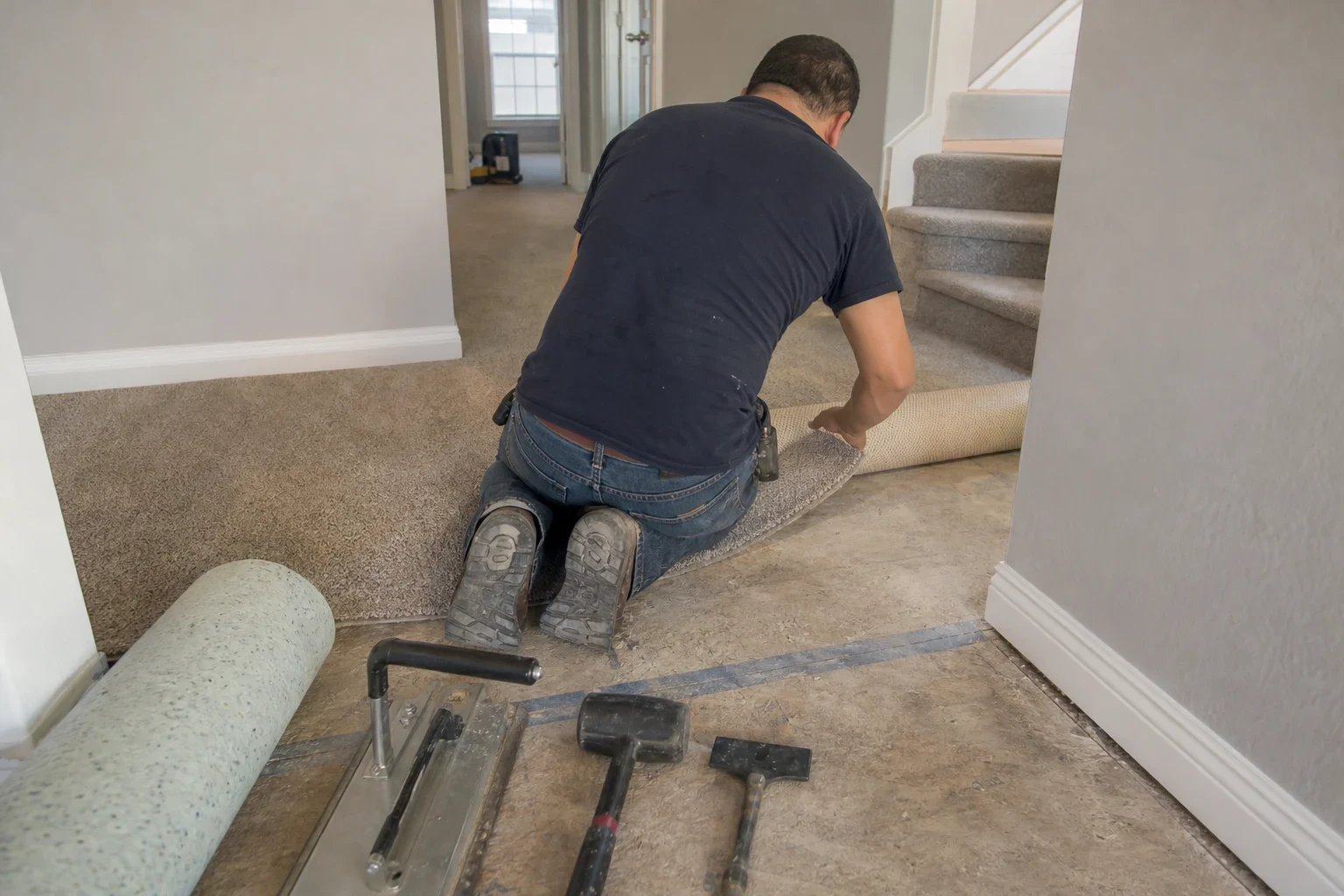
We pull the old carpet, check the slab or subfloor underneath, lay a pad suited to the room and power-stretch the new carpet so it stays flat for years. You get clean seams, tidy edges at every doorway and a room you can walk on the same evening.
What a Good Carpet Install Actually Depends On
Most carpet that ripples, buckles or splits at a seam failed because of what happened during installation. Loose tack strip, the wrong pad thickness or carpet that was knee-kicked instead of power-stretched will all show up as wrinkles within a year or two. The carpet itself is rarely the problem.
Most houses around Webster sit on concrete slabs, and Gulf Coast humidity pushes moisture up through that concrete. We check for it before we choose a pad, because damp concrete under the wrong cushion can lead to musty odors and loosened tack strip. We have been in business 25+ years, so we know where these slabs tend to crack and how older homes settle.
Carpet makes sense for bedrooms, bonus rooms and family rooms where you want warmth and quiet underfoot. For kitchens, baths and entries that see water, our luxury vinyl plank or tile flooring pages cover options that hold up better there.
What Your Carpet Installation Includes
Removal and haul-off
We cut the old carpet into strips, roll it with the pad and take it away. Old staples and pad remnants get scraped off so nothing telegraphs through the new carpet.
Slab and subfloor prep
We sweep the floor, patch cracks and low spots, and check for moisture. On a wood subfloor in a raised or two-story room, we screw down squeaky panels before the pad goes in.
New tack strip at the walls
Old strip with dull pins or rusted nails gets replaced. On concrete we use strip with masonry nails set the right distance from the baseboard so the carpet edge tucks cleanly.
Pad matched to carpet and room
Thick, soft pad feels nice in the store but lets carpet flex too much and wears out the backing. We pick density and thickness to fit the carpet maker's spec and the traffic in that room.
Power stretching and seaming
We stretch the carpet wall to wall with a power stretcher, not just a knee kicker, so it stays tight through humid summers. Seams are hot-melt taped and placed away from doorways and main walking paths where we can.
Transitions and trim
Where carpet meets tile, vinyl or wood, we set metal or matching transition strips so edges do not fray or catch toes. Doors that drag on the new height get noted so you know before we leave.
Signs It Is Time to Replace Your Carpet
Ripples that come back
If wrinkles return after restretching, the backing has likely delaminated or the pad has broken down. Stretching again will not hold.
A musty smell near the floor
Odor that lingers after cleaning often points to moisture trapped in the pad against the slab. The pad and sometimes the carpet need to come out so we can look at the concrete.
Crushed pile along your walkways
The fibers on the routes you walk every day have lost the twist set into them at the mill, so they lie flat no matter how often you vacuum. A deep clean will not put that twist back.
Seams pulling apart
Visible seam lines or edges lifting at doorways mean the seam tape or tack strip has failed. Left alone, the carpet edge frays and gets harder to repair.
Crumbling pad underneath
Lift a corner in a closet. If the pad turns to powder or sticks to the slab, it is no longer cushioning the carpet and wear will speed up.
How Your Carpet Install Day Runs
- 1
Measure and plan the seams
Before ordering, we measure each room and draw the layout so carpet roll widths fall where seams will be least visible. This also keeps waste down, which affects how much carpet you buy.
- 2
Clear and tear out
We ask you to empty small items, dressers and electronics from the room. We move large pieces like beds and sofas as needed, then pull the old carpet, pad and staples.
- 3
Prep the floor
We patch, clean and check the slab or subfloor for moisture and loose spots. New tack strip goes in around the room.
- 4
Pad, stretch and seam
The pad is laid and stapled or glued, the carpet is rolled out, seamed and power-stretched to the walls. Edges are trimmed and tucked under the baseboard.
- 5
Cleanup and walkthrough
We vacuum, haul off the scraps and walk the rooms with you. You can put furniture back that night, though we suggest waiting a day on very heavy pieces.
Where Your Carpet Installation Cost Comes From
The carpet you pick is one piece of the total. Pad, labor and the work needed to get the floor ready all vary from one home to the next. We walk through each line with you by phone so nothing on the bill is a mystery once the job starts.
- Carpet and pad choice
- Fiber type, pile height and pad density all change the cost. A good pad costs a bit more but adds years to the carpet.
- Room shape and seams
- Rooms wider than a standard roll, angled walls and closets add seams and waste. Simple rectangles go faster and use less material.
- Slab condition
- Cracks, old glue and high spots on the concrete take time to fix. Moisture problems may call for a different pad or a barrier layer.
- Furniture and stairs
- Moving heavy furniture and covering stairs both add labor. Stair carpet is cut and fit step by step, which our stair flooring page explains in detail.
Carpet Installation Questions
Something not covered here? (346) 536-5395
Do I need a permit to replace carpet?
In most cases, no. Swapping carpet and pad is treated as a finish replacement and does not normally need a permit. If the job uncovers subfloor damage or plumbing leaks, that repair may fall under different rules, and we will tell you before going further.
Can you install carpet on a damp slab?
We check the slab before we start. Light moisture can usually be handled with a pad that has a built-in moisture barrier. If the concrete is wet from a leak or drainage issue, that needs fixing first, or the new pad will hold water and smell.
How long does the install take?
A few bedrooms usually take one day, including tear-out and cleanup. A whole house with stairs and many seams can take longer. We give you an estimate of the timeline when we measure.
Will the new carpet smell?
New carpet and pad can have a mild odor for a few days. Opening windows and running the AC fan helps clear it. A smell that lasts longer than that is unusual and worth a call.
Why does carpet need to be power-stretched?
A knee kicker only pushes carpet a short distance, so it tends to loosen as humidity changes. A power stretcher pulls the carpet tight across the whole room and locks it onto the tack strip. That is what keeps wrinkles from showing up the next summer.
Ready for Carpet That Stays Flat
Tell us which rooms you are covering and what is on the floor now. We will talk through pad options, seam placement and what the job will involve.